

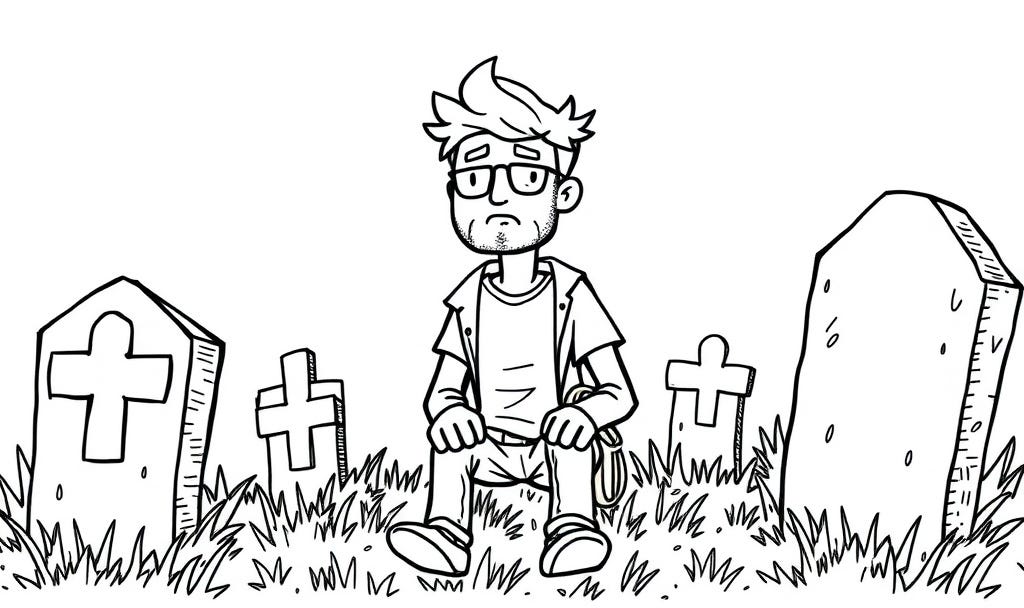
Startups have a notorious failure rate – some estimates say 9 out of 10 startups eventually fail. Yet, contrary to what many first-time founders expect, startups rarely fail because a giant competitor swoops in or because of some external “homicide.” Instead, most startups die by “suicide,” meaning their demise is self-inflicted by internal issues. As YC founder Paul Graham once noted, “Startups are more likely to die from suicide than homicide.” In my experience building two startups, I’ve seen that the biggest threats usually come from within the company’s own walls, not from the outside world.
Suicide, Not Homicide: Internal Collapse vs. External Threats
There’s a saying in Silicon Valley: “Startups don’t die, they commit suicide.” Entrepreneur Justin Kan used this phrase after observing how many young companies implode long before they run out of options. Startups often give up on themselves while they’re “still very much breathing”. Founders burn out or lose heart, and the team calls it quits. In Kan’s words, “the people in them give up and move on… or they realize that startups are hard and [cause] massive… exhaustion”. Founders may abandon ship – taking another job, going back to school, or simply drifting away – even when some hope remains. Y Combinator’s Harj Taggar noticed the same pattern: many companies fail simply because the founders stop trying. “The startups that take off are the ones that continue to keep going… the ones that succeed are the ones that keep going. Like PG says, the way to win is to not die.” In short, giving up too early is often the real killer.
Why would a passionate founding team quit on their own company? Often it’s the accumulation of internal problems – no clear traction, constant obstacles, team disagreements, stress – that leads to despair. Taggar explains that at YC’s stage, “companies fail because they give up or the founders don’t get along”, and another big reason is “the company is not making what people really want.” When you’re not hitting product-market fit or you’re fighting with your co-founder every week, it’s easy to see why some founders lose the will to continue. External competition alone rarely directly kills a startup; if you have a great product and a solid team, a competitor can’t easily destroy you. Far more often, startups defeat themselves through inaction, conflict, or loss of focus, effectively “committing suicide” while the competition simply watches.
Running Out of Money – The Final Symptom
One of the most visible ways startups die is running out of cash. If a company can’t pay its team or its bills, it’s game over. Indeed, in an analysis of 100+ startup post-mortems, “running out of cash” was the #2 most-cited reason for failure. Often startups fail to raise their next funding round in time, or their revenue never materializes before the initial funds dry up. But lack of money is usually a symptom, not the root cause. The deeper issue is why the startup ran out of money in the first place. In many cases, it’s because the startup never achieved product-market fit – they were making something few people truly wanted, so revenue and investor interest stayed low. Venture capitalist Marc Andreessen puts it bluntly: “The #1 company-killer is lack of market.” If you build a product no one needs, it doesn’t matter how much seed money you have; eventually, the cash will burn away with nothing to show, and fundraising will be impossible. Andreessen argues that startups fail when they never reach product/market fit – in other words, they couldn’t find a real, paying market for their product.
Besides product-market fit, financial mismanagement can accelerate the demise. Some teams spend too aggressively (hiring too many people, lavish marketing) before they’ve validated the business, causing a cash crunch. Others are too slow to monetize or raise funds, and simply run out of time. Interestingly, many founders who “ran out of money” were in fact on the verge of success but quit too soon. As Justin Kan noted, it’s rare to see a founding team give up when metrics are skyrocketing – most give up when growth is flat and funds are low. That is exactly the moment when patience and iteration are needed: “One thing many entrepreneurs don’t realize is that patience and iteration are critical in achieving product-market fit… overnight successes never actually happen overnight.” Those who persevere and find a way to stretch their runway – by cutting burn, pivoting, or securing a bridge round – get a shot at turning things around. Those who don’t, wind up in the startup graveyard marked “out of cash.”
Founder Conflict and Team Breakups
If running out of money is the final nail in the coffin, co-founder conflict is often what built the coffin to begin with. A popular (and startling) statistic from Harvard researcher Noam Wasserman found that 65% of high-potential startups fail due to conflict among co-founders. I believe it. In the early stages, the founding team is the company – if that team falls apart, the company often falls apart with it. Co-founder infighting can scare away investors, cause paralysis in decision-making, and poison the company culture from within. In fact, choosing the wrong co-founder can be as fatal as choosing the wrong idea. Startup lore frequently compares co-founders to a married couple; if the relationship turns sour, a messy divorce can kill the startup even if the product is promising. Misalignment on big questions (Should we expand fast or pace ourselves? Do we sell the company or aim for IPO? How do we define success?) will eventually lead to irreconcilable differences. If one founder envisions building a billion-dollar unicorn while the other would be happy with a small, stable business, they’ll clash on strategy and goals.
Beyond outright conflict, there’s also the scenario of a key founder or early team member leaving. When a co-founder quits, it’s incredibly hard on a young startup’s morale and operations. The remaining team now has a “single founder” problem – all the burdens fall on one person’s shoulders. Paul Graham actually warned about having a single founder from the start. He observed that startups with multiple founders have an edge: “Starting a startup is too hard for one person. …You need colleagues to brainstorm with…and to cheer you up when things go wrong.” When you lose that camaraderie, the low points in a startup can become unbearable. I’ve seen companies crumble soon after a founding team member left, not just because of the lost skills, but because the emotional glue was gone. In some cases, remaining founders lose confidence and momentum, leading to a slow fizzle. As an investor friend once told me, “bad bedfellows” – meaning a poor fit between founders or team – can sink even a good idea. Ensuring the founding team is aligned and works well together is absolutely critical to a startup’s survival.
Loss of Focus and Founder Burnout
Another common self-inflicted wound is when founders lose focus or motivation. Startups demand single-minded dedication; if the leaders start getting distracted, it’s a bad sign. In fact, “losing focus” was listed among the top 20 reasons startups fail (it was #11) in the CB Insights analysis. This can take many forms. Sometimes founders start chasing new side projects – maybe tinkering with another startup idea, or taking on consulting gigs, or even dabbling in a new hobby – instead of pushing their main venture forward. Other times it’s more subtle: the team keeps pivoting in new directions without committing to one strategy, or spreads itself thin pursuing too many features at once. Either way, the startup loses momentum because its leaders aren’t all-in on one clear vision.
Loss of focus is often tied to loss of passion. In the early days, you need a huge amount of enthusiasm to get through the inevitable challenges. If the founders’ hearts just aren’t in it anymore, progress grinds to a halt. I’ve seen founders mentally check out when growth stalled – instead of doubling down, they started daydreaming about other opportunities. Justin Kan described how the temptation to quit hit him multiple times during Justin.tv: he would come to the brink of “packing it up and moving on” when things looked bleak. It’s human nature to want to escape a painful grind, and running a startup can certainly become a grind. Founders also face extreme stress and burnout, which can sap one’s motivation. Long hours, pressure to survive, and the emotional rollercoaster can lead to exhaustion. When a founder is burned out, they might start procrastinating, avoiding tough problems, or delegating critical decisions – all signs the fire in the belly is dying out. Eventually, if the passion doesn’t reignite, the startup slowly withers from neglect. As one founder quipped, “Startups don’t usually starve to death; they drown in all the opportunities and distractions.” Keeping focused on the mission is harder than it sounds, but absolutely necessary to avoid a self-induced death.
How to Avoid a Startup Suicide
The good news is that knowing why startups die also highlights how future founders can maximize their startup’s chances of survival. After years of my own trial and error (and observing many others), here are some key lessons to heed:
Choose Your Co-founder(s) Wisely and Align on Vision: Picking a co-founder is arguably as important as picking the idea. Make sure you share values and long-term goals. Misaligned aspirations (e.g. one founder wants a quick sale, the other wants to build forever) will lead to conflict. Remember that 65% of startups fail due to co-founder conflict, so treat your co-founder relationship with care and communicate openly. It’s better to hash out expectations (equity splits, roles, exit strategy) early than to fight later.
Make Something People Want (Achieve Product-Market Fit): This is the golden rule from YC – “not making something users want” is the ultimate killer. Talk to your target users incessantly, validate that you’re solving a real problem, and be willing to iterate until you hit a nerve. If customers genuinely love your product, you’re far less likely to die. Traction solves a lot of problems – it attracts investors, boosts team morale, and gives you revenue to extend your runway. As Harj Taggar said, many startups fail because “the company is not making what people really want.” Don’t fall in love with your tech for its own sake; solve a pain point that truly matters to people.
Manage Your Runway and Finances Cautiously: Running out of cash is a preventable failure in many cases. Always know your runway (months of cash left) and plan fundraising or revenue milestones well before you hit empty. Keep costs under control – hire slowly and spend on what moves the needle, not on vanity. Many startups burn money on nice-to-haves and regret it later. As a rule of thumb, try to raise enough money to reach the next major milestone (product launch, user target, revenue goal) plus a buffer. If things take longer, be ready to cut expenses or raise an extension round. It’s not glamorous, but survival often comes down to prudent cash management. Investors will ask “What will you do if you can’t raise in time?” – have an answer (e.g. reduce burn, find a strategic partner, etc.) so you’re not caught in a crisis. Essentially, buy yourself time to find what works.
Stay Focused and Commit Fully: Don’t try to run two companies at once, and don’t treat your startup like a side hustle. The startups that thrive are usually the ones where founders jump in with both feet. Shiny new ideas will always tempt you – resist chasing every rabbit. Paul Graham’s advice in “Startups in 13 Sentences” was simply: “Focus.” You and your team should know your top priorities each quarter and say no to distractions. This also means persevere through the tough times. If you keep making progress, even small wins, you’ll outlast the many who quit. As the saying goes, the only way to guarantee failure is to stop trying. Nearly every successful startup went through a phase where things looked grim, but the founders kept at it. Cultivate determination and resilience as core team values.
Nurture a Healthy Co-founder Relationship and Team Culture: Since internal discord is such a startup killer, invest in keeping your team aligned. Communicate constantly with your co-founder(s) – have the hard conversations about performance, equity, and direction sooner rather than later. If roles or compensation need adjusting, address it. Set up a mechanism to resolve disagreements (e.g. a trusted mentor or board member who can mediate). Many conflicts can be softened by clear communication and empathy – remember you’re on the same side trying to make the startup win. Also, build a culture where everyone can voice concerns and where burnout is acknowledged. Encourage people (including yourselves as founders) to take breaks when needed to avoid total exhaustion. A supportive, mission-driven culture helps prevent the frustration and misalignment that often lead to “startup suicide.”
Plan for Success (and Failure) Together: It may sound pessimistic, but discuss upfront what happens if things go south. If one founder wants out, how will you handle it? If an acquisition offer comes, are you both open to selling? Aligning on these scenarios can save a lot of heartache later. On the flip side, make a shared plan for success: what is our vision if all goes well? Having a common vision keeps everyone motivated during the dark days. It’s easier to stay committed when you and your co-founder see the same endgame and why it’s worth fighting for.
In conclusion, most startups don’t meet their end because of some predator in the market. They meet their end because of internal missteps, broken relationships, or loss of will. The post-mortems and essays from seasoned founders all echo this truth: your startup’s fate is largely in your own hands. The flip side is empowering – if you avoid the classic pitfalls and take care of your team, you greatly increase your odds of survival. Build something people want, keep your team united, spend wisely, and never ever give up too early. Do that, and you’ll dramatically raise the chance that your startup doesn’t just avoid “suicide,” but actually thrives and lives to see its vision come to life. As Paul Graham famously implied, “the way to win is to not die.” Stay alive, and you give yourself the chance to eventually succeed.
Sources & Further Reading
This article draws on insights from leading startup thinkers and investors, including Paul Graham (Y Combinator), Sam Altman, Justin Kan, Harj Taggar, and essays from a16z, Sequoia Capital, First Round, NFX, Index, and Accel. It also references research such as CB Insights’ analysis of 100+ startup post-mortems and Noam Wasserman’s The Founder’s Dilemmas on co-founder conflict.
That 65% co-founder conflict stat is wild, but it tracks with what I've seen. People underestimate how much pressure amplifies every tiny disagreement about vision or equity splits. The smartest move is having those brutal conversations super early, not when you're already drowning.
This hits too close. Every time I’ve seen a company fold, the external story was “competition”.. but the inside story was fatigue, drift, or two founders quietly giving up on each other. Your framing makes it brutally clear, and honest. 🙏